Bagbazar Sarbojanin: A Century of Sabeki Elegance, Daaker Saaj & North Kolkata Pride
Discover the timeless charm of Bagbazar Sarbojanin, one of North Kolkata's treasured Durga Puja traditions, known for its sabeki spirit, the beauty of daaker saaj, and a legacy woven into the city's cultural identity.
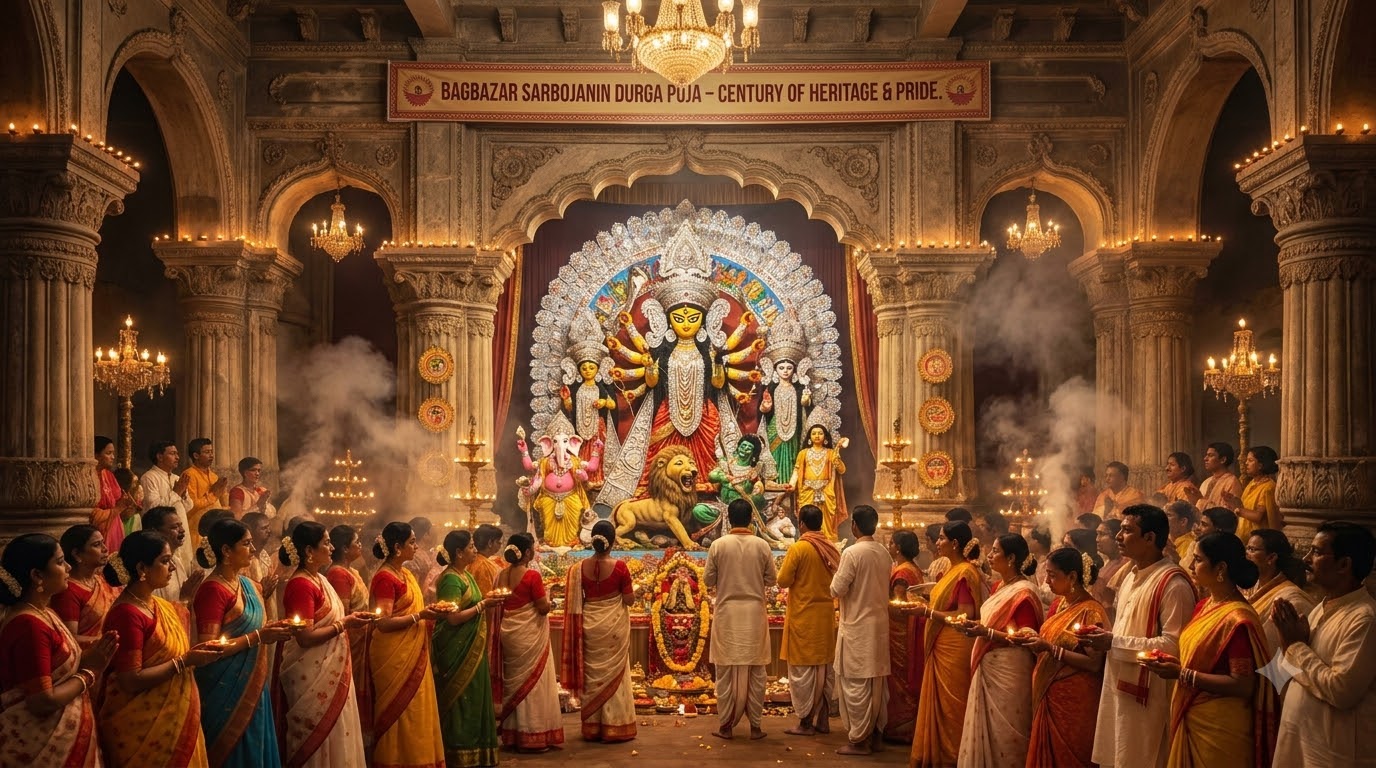
Celebrating the stories, traditions, and divine spirit of Durga Pujo. Photograph: The Agomonii Edit
Kolkata's Durga Puja is celebrated for its imagination and scale, but some of its most memorable experiences lie in traditions that have stood the test of time. In North Kolkata, where old neighbourhoods preserve layers of the city's cultural history, Bagbazar Sarbojanin holds a special place for those drawn to the enduring charm of sabeki Pujo.
Known for its traditional spirit and association with daaker saaj, Bagbazar represents a side of Durga Puja where craftsmanship, community, and continuity take centre stage. It is a destination for visitors who want to experience more than an elaborate pandal—to discover the traditions and emotions that make Kolkata's Pujo unique.
Bagbazar Sarbojanin: A Living Tradition of North Kolkata
North Kolkata's old neighbourhoods have long been part of the city's Durga Puja story. Narrow lanes, historic houses, familiar community spaces, and generations of shared memories create an atmosphere distinct from the grand themed installations found elsewhere.
Bagbazar Sarbojanin belongs to this cultural landscape. Its identity is closely associated with the traditional character of North Kolkata's public celebrations, where the connection between the puja and its neighbourhood remains central to the experience.
For visitors exploring the city's heritage pujas, Bagbazar offers an opportunity to appreciate the continuity of community worship alongside the changing face of modern Kolkata.
What Makes Sabeki Pujo Special?
The Bengali word sabeki evokes a traditional aesthetic—one that values familiar forms, established artistic conventions, and a sense of timeless elegance.
At a sabeki puja, the experience is not necessarily about creating the most unexpected spectacle. Instead, the appeal lies in the details: the visual composition of the pratima, the decorative elements, the rituals, and the atmosphere created by devotees and visitors gathering together.
This traditional approach connects present-day celebrations with memories passed down through families and neighbourhoods. For many visitors, it is precisely this sense of familiarity that makes a heritage puja special.
Daaker Saaj: The Beauty of Traditional Craftsmanship
One of the expressions closely associated with traditional Bengali pratima decoration is daaker saaj. Historically, the name is linked to decorative materials such as shola and metallic foil, which became associated with the ornamentation of Durga and her family.
The result is a distinctive decorative style that can feel intricate yet restrained, allowing the form of the deity and the craftsmanship of the ornaments to remain at the centre of attention.
Daaker saaj also tells a larger story about Bengal's artisan traditions. Behind the finished decoration lies the work of skilled craftspeople whose knowledge and techniques help keep traditional forms of festival art alive.
For anyone interested in the artistic heritage of Durga Puja, this tradition offers a reason to look closely at the details rather than simply moving from one pandal to the next.
More Than a Pandal: The Pride of a Neighbourhood
Community pujas are shaped by more than their visual presentation. They bring together organisers, artisans, local residents, volunteers, devotees, and visitors in a shared celebration.
At heritage destinations such as Bagbazar, the surrounding neighbourhood is part of the experience. The streets, the movement of people, the sounds of the festival, and the collective anticipation all contribute to the atmosphere.
This is one reason traditional pujas continue to hold a special place in Kolkata's festive calendar. They connect the present with a living cultural memory—one renewed each year as people return to familiar places and introduce them to a new generation.
Visiting Bagbazar Sarbojanin During Durga Puja
If Bagbazar is on your Pujo itinerary, a little planning can help you enjoy the visit more comfortably.
Explore North Kolkata by neighbourhood
Rather than travelling across the city between every stop, consider grouping Bagbazar with other North Kolkata pandals. Check the locations of your chosen destinations before deciding the order of your route.
Check your transport options
North Kolkata's busy streets can become crowded during the festival. Explore available metro, bus, and railway options for your journey, and check current service information before setting off.
Give yourself time to look closer
Heritage pujas reward a slower visit. Take time to appreciate the pratima, traditional decorative details, and the atmosphere around the pandal instead of treating every stop as a quick photograph.
Keep your itinerary flexible
Queues, road restrictions, and walking distances can affect your plans. Allow extra time between destinations and follow local traffic and crowd-management instructions.
Plan Your Heritage Pujo Trail with Agomonii
Discovering Kolkata's Durga Puja is about finding the experiences that matter to you—whether that means exploring elaborate contemporary themes, visiting traditional neighbourhood celebrations, or bringing both into one itinerary.
With Agomonii, you can discover pandals, explore their details, check transit directions from your current location, and find nearby metro stations, bus stops, and railway stations to help organise your journey.
Add Bagbazar Sarbojanin to your North Kolkata plans and experience a side of Pujo where tradition, craftsmanship, and neighbourhood pride remain part of the celebration.
Visit Agomonii.in to explore Kolkata's Durga Puja pandals and plan your next pandal-hopping trip.
Editorial note: This article focuses on Bagbazar Sarbojanin's traditional cultural identity. Verify specific anniversary dates and historical milestones against reliable sources before publishing precise claims about its founding year or centenary.