More Than a Festival: Why Kolkata's Durga Puja Is UNESCO Intangible Cultural Heritage
Inscribed by UNESCO in 2021, Durga Puja is a living tradition shaped by generations of artisans, shared rituals, community participation, and the cultural identity of Bengal.
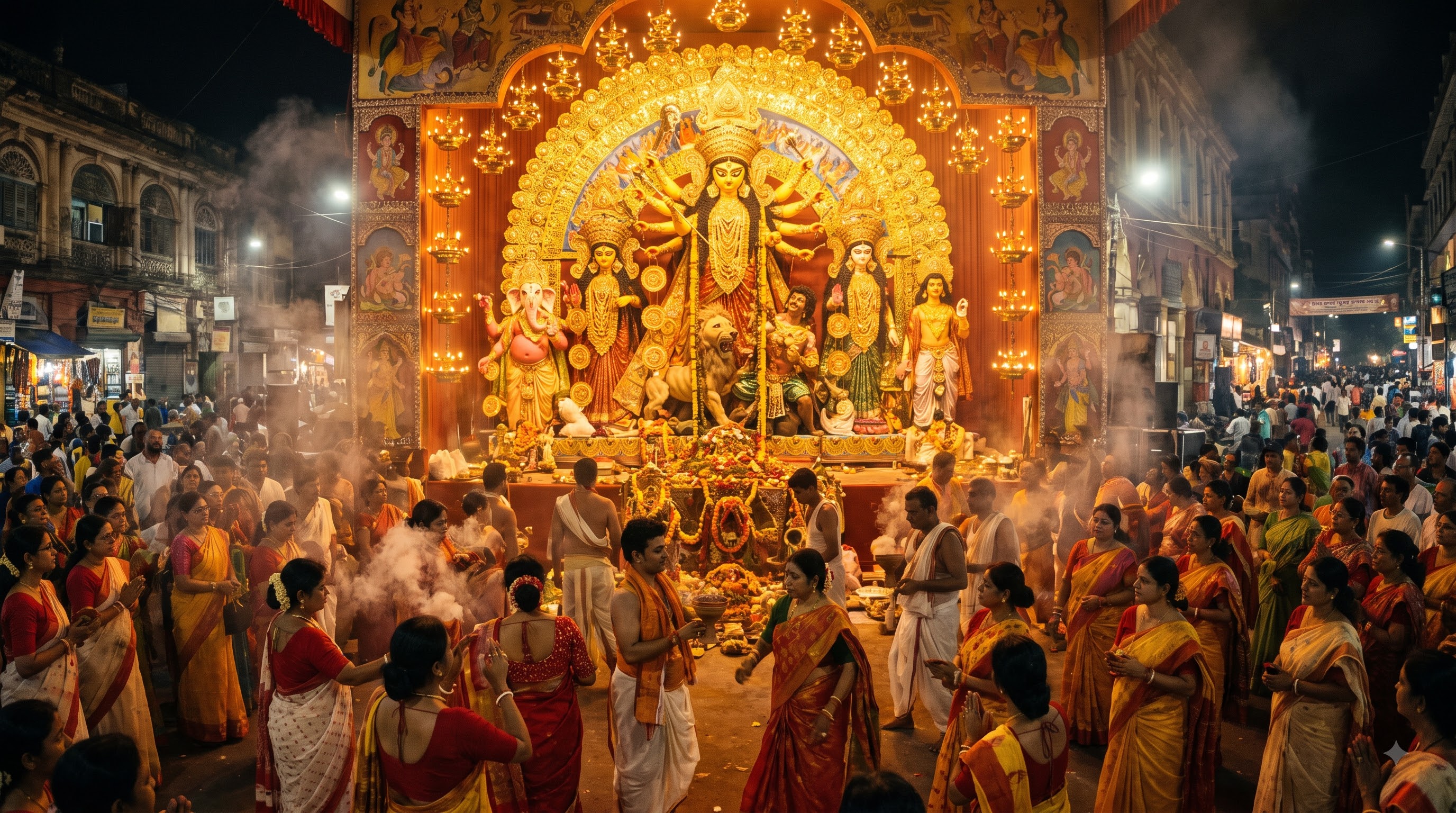
Celebrating the stories, traditions, and divine spirit of Durga Pujo. Photograph: The Agomonii Edit
In December 2021, UNESCO inscribed Durga Puja in Kolkata on its Representative List of the Intangible Cultural Heritage of Humanity. The recognition celebrated not simply a spectacular annual festival, but a living tradition sustained by the people, skills, rituals, and shared experiences that give it meaning.
The distinction matters. Intangible cultural heritage is not limited to monuments, historic buildings, or objects preserved behind glass. It encompasses the practices, knowledge, expressions, and skills that communities recognise as part of their cultural inheritance and continue to pass from one generation to the next.
For Kolkata, Durga Puja brings this heritage into public view every autumn.
A Tradition That Begins Before the Festival
Long before the first dhaak sounds through the streets, the work of Durga Puja is already underway.
In artisan workshops, particularly in Kumartuli, generations of clay modellers have developed the skills required to create the images of Maa Durga and her family. Straw frameworks, layers of clay, careful detailing, and painting transform raw materials into figures central to the festival's rituals.
The process carries both continuity and change. Traditional techniques remain important, while individual artisans bring their own interpretations and approaches to the work. The knowledge involved is preserved not only through finished idols, but through practice, observation, and the transfer of skills.
UNESCO's description specifically highlights the making of clay images using unfired clay from the Ganga, the ritual painting of the goddess's eyes, and the immersion of the images at the end of the celebrations.
When Art Becomes a Shared Public Experience
One of the defining characteristics of Kolkata's Durga Puja is the way artistic creation moves beyond the workshop and into public space.
Puja committees, artists, architects, craftspeople, electricians, lighting designers, and other workers collaborate to build temporary structures known as pandals. Some draw on traditional Bengali architectural forms; others interpret historical sites, contemporary ideas, social questions, or artistic movements through materials, design, and light.
These structures are temporary, but the knowledge and creative practices behind them are part of a continuing cultural tradition.
The festival also changes how the city is experienced. Streets and neighbourhoods become places of gathering, artistic exploration, worship, and exchange. Visitors move between pandals, encountering different interpretations of the festival within a shared public celebration.
This relationship between religious observance and public artistic expression was central to UNESCO's recognition of Durga Puja in Kolkata.
The Community at the Heart of the Heritage
The pandals may draw attention, but the festival depends on a much wider network of people.
Families, priests, drummers, artisans, community organisers, performers, volunteers, and local residents all contribute to the celebrations. The sounds of the dhaak, the observance of rituals, the preparation and sharing of food, and the gatherings that take place across neighbourhoods are integral to the experience.
Durga Puja has also evolved alongside Kolkata itself. Community-organised celebrations helped bring worship into shared public spaces, while contemporary artistic practices have expanded the ways in which pandals are imagined and constructed.
UNESCO's inscription recognised the people who carry these practices forward, including the role of women and initiatives to involve marginalised groups in safeguarding the tradition.
The festival's cultural significance therefore extends beyond what can be seen in photographs. It lies in the relationships, knowledge, participation, and collective effort that make the celebrations possible.
Why Intangible Cultural Heritage Matters
Recognition by UNESCO is not the same as declaring a festival a World Heritage Site. Durga Puja in Kolkata was inscribed on the Representative List of the Intangible Cultural Heritage of Humanity in 2021.
The listing acknowledges the cultural importance of a living tradition. It also draws attention to the need to sustain the knowledge and practices that allow it to continue.
For Durga Puja, that means valuing the artisans whose skills shape the idols and pandals, supporting the transmission of traditional knowledge, encouraging community participation, and considering the festival's environmental and accessibility challenges.
The celebrations may change from year to year, but safeguarding the heritage means ensuring that the people and practices behind them can continue to thrive.
A Living Heritage, Recreated Every Autumn
When the lights come on across Kolkata, what emerges is more than a series of elaborate installations. It is the visible expression of a tradition shaped by devotion, craftsmanship, creativity, and collective participation.
The idols will eventually return to the river, the pandals will come down, and the city will gradually return to its everyday rhythms. Yet the knowledge passed between artisans, the memories created within communities, and the anticipation of welcoming Maa Durga home will continue.
That is what makes Durga Puja living heritage: not that it remains unchanged, but that each generation participates in carrying it forward.
Explore Kolkata's pandals and the people and traditions behind them with Agomonii, a companion to discovering the city's Durga Puja celebrations.
Further reading
Read UNESCO's official entry on Durga Puja in Kolkata for the inscription details and the cultural practices recognised in 2021.