Ahiritola Sarbojanin 2026: In Search of Madhuri Maitra — North Kolkata’s Sweet Legacy of Togetherness
With “মাধুরী মৈত্রীর অন্বেষণে,” Ahiritola Sarbojanin explores the sweetness of friendship, neighbourhood life, and Bengal’s beloved mishti heritage through traditional craftsmanship, playful art, and memories of a simpler time.
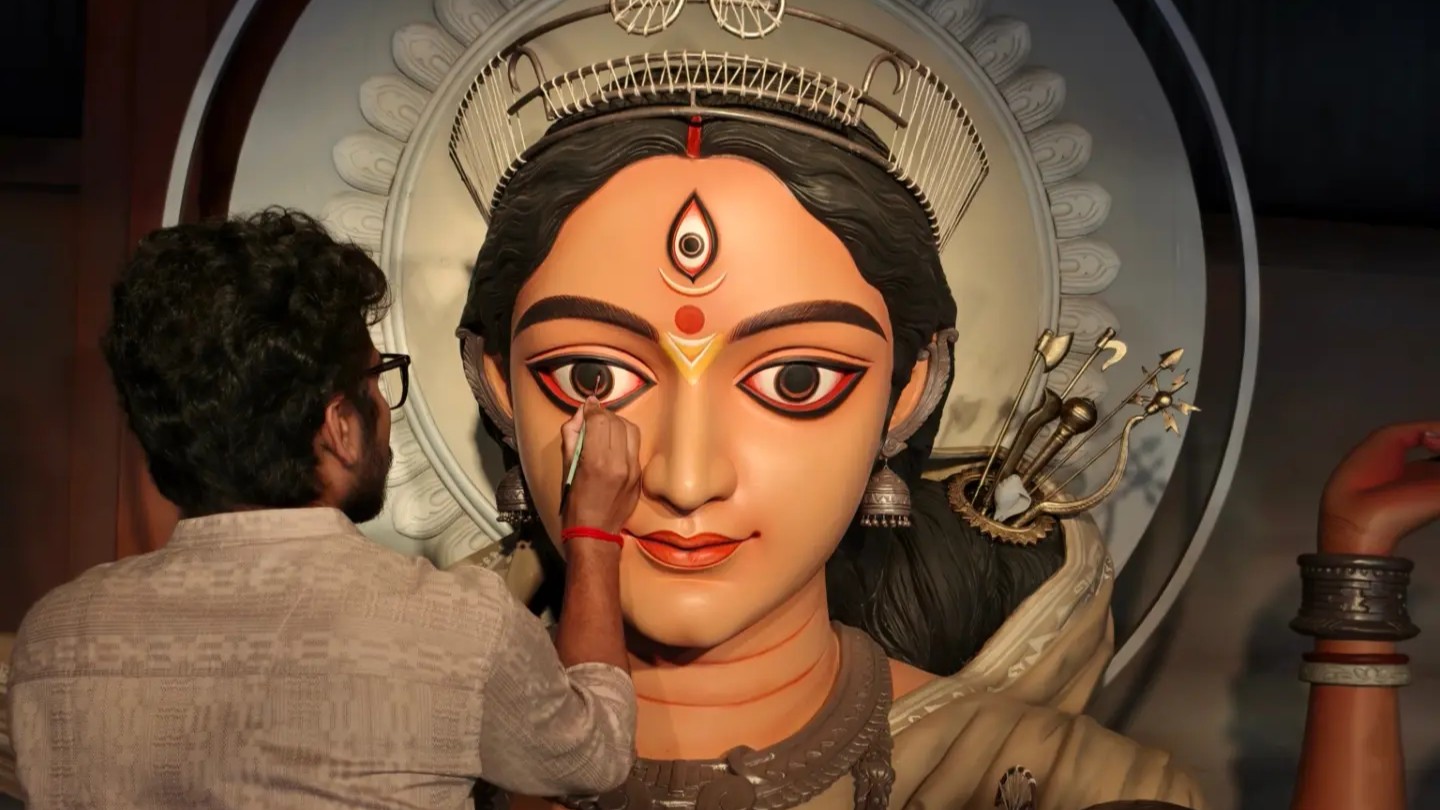
Celebrating the stories, traditions, and divine spirit of Durga Pujo. Photograph: The Agomonii Edit
In North Kolkata, sweetness has never belonged only to the plate. It lives in familiar greetings across a shop counter, in the sweet box carried home for a celebration, and in the small rituals that bring neighbours together. A local mishtir dokan can be a meeting place as much as a business, connecting generations through flavours, memories, and everyday affection.
For its 2026 Durga Puja, Ahiritola Sarbojanin explores this world through the theme “মাধুরী মৈত্রীর অন্বেষণে” — In Search of Madhuri Maitra. The idea brings sweetness and friendship into the same frame, inviting visitors to look at North Kolkata's cultural heritage through the relationships that have long given neighbourhood life its warmth.
What Does “মাধুরী মৈত্রীর অন্বেষণে” Mean?
The theme's Bengali words carry a meaning that goes beyond a straightforward translation.
মাধুরী (Madhuri) evokes sweetness. It can suggest the familiar pleasure of Bengali mishti, but also the gentleness of relationships and the comfort of shared memories.
মৈত্রী (Maitri) means friendship, fellowship, and togetherness. In the context of para life, it recalls the bonds formed between neighbours, shopkeepers, regular customers, and families who have known one another for years.
অন্বেষণে (Anweshane) means in search of. It gives the theme the character of a journey — an exploration of something precious that may be easy to overlook in the rush of modern life.
Together, the phrase points towards a search for the sweetness of togetherness: the human connections that turn a neighbourhood into a community.
For Ahiritola Sarbojanin, the idea offers a way to revisit the social world surrounding Bengal's sweet-making traditions. Mishti becomes more than a culinary symbol. It becomes a reminder of how people mark occasions, maintain relationships, and create memories together.
A Sweet History Told Through the Pandal
One of the central ideas behind the theme is the heritage of North Kolkata's sweet shops and the people who shaped it.
The planned visual narrative draws on the history of traditional mishti, the work of legendary halwais, and the familiar shops associated with the Ahiritola–Shyambazar neighbourhood. Through painted and displayed scenes, the pandal aims to bring these elements of local history into the visitor's journey.
Bengal's sweets occupy a special place in everyday and ceremonial life. Mishti is offered when families celebrate, shared when guests arrive, and carried to friends and relatives during important occasions. The neighbourhood sweet shop often becomes part of these routines, recognised not only for what it sells but for the relationships built around it.
By placing this heritage within a Durga Puja setting, the theme connects food, memory, craftsmanship, and community. Visitors are invited to look beyond the finished sweet and consider the people, places, and traditions that have helped it become part of Bengal's cultural vocabulary.
The pandal's storytelling approach also reflects something characteristic of North Kolkata: history is often encountered not only in formal institutions, but in old streets, family businesses, neighbourhood conversations, and familiar landmarks.
“আমরা হাসি খেলার”: A Playful Side of Nostalgia
The theme is not intended to be a solemn history lesson. A playful visual element adds warmth and humour to its wider narrative.
Among the details visible in the pandal's construction progress is a large cartoon-style mural featuring an expressive character embracing two children, accompanied by the words “আমরা হাসি খেলার.” The phrase evokes laughter, play, and the uncomplicated happiness of childhood.
Its presence offers a lighter counterpoint to the historical references elsewhere in the concept. The connection between sweets and childhood is immediate, but the image also recalls the joy of growing up in a close-knit neighbourhood — playing with friends, recognising familiar faces, and finding delight in everyday moments.
This playful language helps make the theme approachable. Instead of treating heritage as something fixed in the past, it presents nostalgia as a feeling that can still be experienced and shared.
Concept creator Manas Das is associated with the theme's creative vision. The combination of historical references, neighbourhood memories, and playful imagery gives the concept room to move between reflection and joy.
Traditional Craftsmanship in Wood
Another notable element in the developing pandal is a large circular wooden structure featuring carved floral motifs.
The element appears to be an important decorative or architectural feature of the design. Its traditional ornamental language complements the theme's interest in older cultural forms and skilled handwork.
Carving requires patience, precision, and an understanding of how a design develops through material. In a festival where pandals can employ a wide range of contemporary techniques, visible craftsmanship offers a reminder of the human labour behind a finished artistic installation.
The wooden structure's floral detailing also creates a visual connection with traditional Bengali decorative styles. Rather than relying solely on printed surfaces or digital imagery, carved ornament can bring texture, depth, and the marks of the craftsperson's hand into the space.
As the pandal takes shape, this element adds another dimension to the theme's relationship with tradition: heritage is not only something represented on a wall, but something created through the continued practice of artistic skills.
The Pratima: Subrata Mudha's Work Takes Shape
At the centre of the celebrations will be the pratima of Maa Durga and her family. The developing clay figures associated with pratima shilpi Subrata Mudha include the goddess's children — Kartik, Lakshmi, Saraswati, and Ganesh — alongside the lion and Mahishasura.
In the early stages, the clay remains unpainted, allowing the forms, proportions, and postures to emerge before the finishing work brings the figures into their final appearance.
Idol-making is a process that unfolds gradually. Straw frameworks provide structure, clay builds the forms, and successive stages of detailing and painting prepare the figures for worship. Each stage depends on the artisan's experience and careful attention to the material.
The committee's message captures the anticipation surrounding the final reveal: “মায়ের অপরূপ রূপ দেখার জন্য অপেক্ষা করতে হবে আর কিছুদিন।” — the incomparable form of Maa will be revealed after a little more waiting.
That sense of anticipation is familiar to anyone who follows a Durga Puja pandal through its construction. The unfinished work offers glimpses of the effort involved, while the completed pratima brings the artistic process together with the devotional purpose of the festival.
North Kolkata, Memory, and the Meaning of Togetherness
The strength of “মাধুরী মৈত্রীর অন্বেষণে” lies in its choice of a subject woven into ordinary life.
Sweet shops, familiar neighbourhood streets, traditional craftsmanship, and childhood memories may seem like separate parts of the city's culture. Yet they often meet in the same places and occasions. A box of mishti can mark a family celebration; a local shop can connect generations; and a neighbourhood puja can bring people together around shared traditions.
By exploring these connections, Ahiritola Sarbojanin's 2026 theme looks towards a form of heritage that is lived rather than simply displayed.
The pandal's visual elements — from the references to sweet-making history to the playful mural, carved wood, and developing pratima — approach that idea from different directions. Together, they invite visitors to consider what makes a neighbourhood memorable: not only its buildings or landmarks, but also the people, practices, and everyday gestures that give it character.
A Search for Sweetness That Still Belongs to the Present
Durga Puja themes often look to mythology, history, architecture, or contemporary artistic expression. Ahiritola Sarbojanin's “মাধুরী মৈত্রীর অন্বেষণে” brings the focus closer to home, towards the familiar culture of North Kolkata and the relationships that grow around it.
Its search is not simply for the sweets of another era. It is also for the warmth associated with sharing them — the friendships, neighbourhood bonds, and small acts of togetherness that can endure even as a city changes.
When the pandal opens, visitors will be able to experience how these ideas come together through its finished design and pratima. Until then, the developing artwork offers a glimpse of a concept rooted in sweetness, memory, and human connection.
Explore Ahiritola Sarbojanin and discover more Durga Puja themes across Kolkata with Agomonii, your companion for finding pandals and planning your Pujo parikrama.