Dhunuchi Naach During Durga Puja: The Rhythm, Ritual and Joy of Bengal
From the beat of the dhaak to swirling incense smoke, discover the tradition of dhunuchi naach, its place in Durga Puja, and how to enjoy performances respectfully.
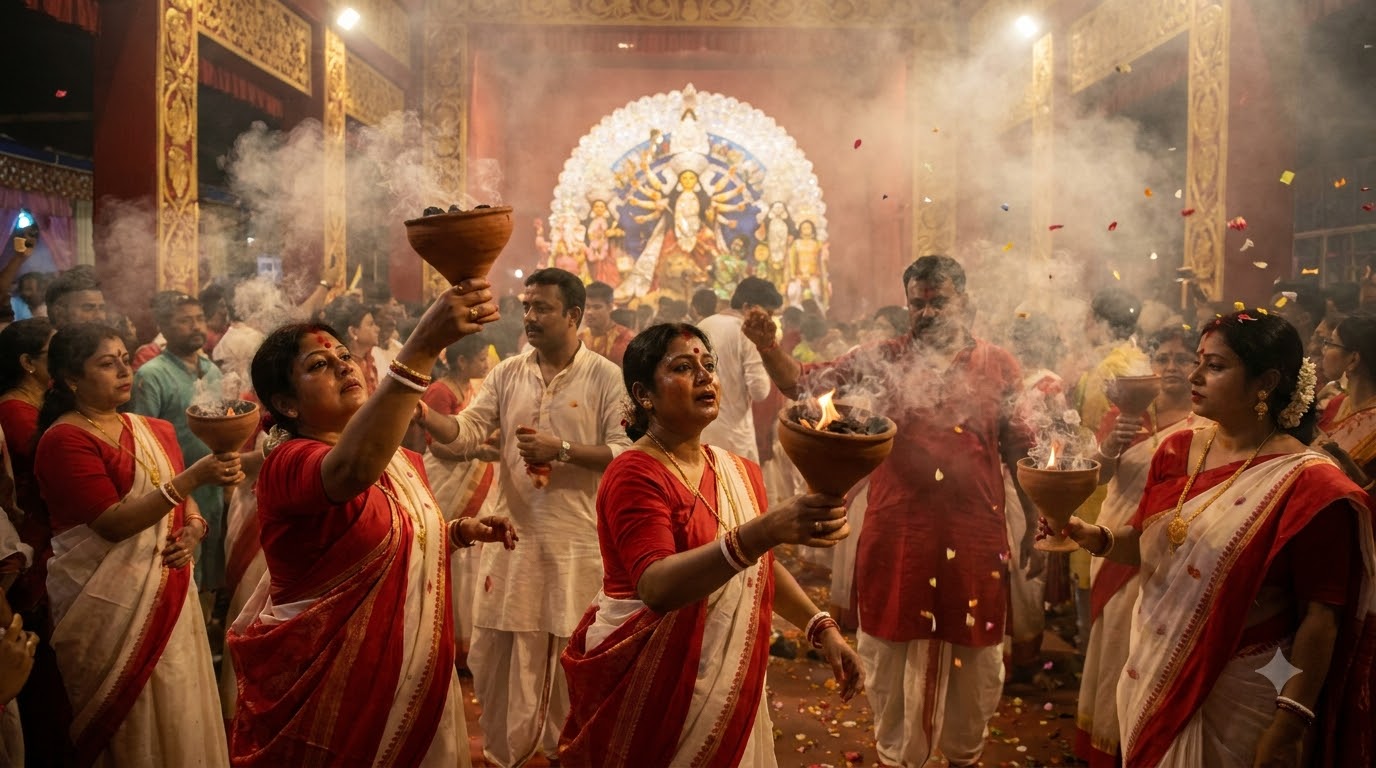
Celebrating the stories, traditions, and divine spirit of Durga Pujo. Photograph: The Agomonii Edit
The beat of the dhaak rises, incense curls through the air, and a dancer begins to move with an earthen burner in hand. For many people, this is one of the defining images of Durga Puja: dhunuchi naach, a ritual performance that brings rhythm, devotion, and festive energy together.
Dhunuchi naach can be graceful, exuberant, and physically demanding. Whether performed by experienced dancers or enthusiastic community members, it often draws a circle of onlookers into the moment, turning a ritual into a shared celebration.
What Is Dhunuchi Naach?
A dhunuchi is a traditional earthen incense burner used during Hindu worship. During dhunuchi naach, performers dance while holding one or more dhunuchis, often filled with burning coconut husk or other incense material. The smoke, movement, and percussion create a distinctive atmosphere around the ritual.
The dance is closely associated with Durga Puja celebrations in Bengal, where it may accompany devotional offerings and festive performances. The exact form varies from one puja to another, shaped by local practice and the people taking part.
The Soundtrack: Dhaak and Dhunuchi
The dhaak's rolling beats give the performance much of its energy. A dancer may move in time with the rhythm, turning, bending, or lifting the burner in carefully controlled movements. The smoke catches the light, and the crowd responds to the changing pace of the drums.
Yet the appeal is not only visual. For many devotees, the ritual is an expression of reverence and participation—a way to become part of the celebration rather than simply watching from the sidelines.
When Can You See Dhunuchi Naach?
Dhunuchi performances are commonly associated with the days of Durga Puja, especially during evening gatherings and ritual occasions at community pandals. Programmes vary by organiser, so there is no single schedule that applies to every location.
If you want to watch a performance, check the puja committee's announcements and arrive early enough to find a safe place to stand. Avoid blocking entrances, ritual areas, or the movement of other visitors.
Is Dhunuchi Naach a Competition?
Some puja committees and cultural organisations organise dhunuchi-naach competitions, inviting participants to perform before judges or an audience. Others feature informal community performances without a formal contest.
Competition rules, age groups, judging criteria, and schedules differ by event. Confirm details directly with the organiser before travelling, and do not assume that every pandal hosts a competition.
Respect and Safety Around the Performance
Dhunuchi naach involves heat, smoke, and a burning vessel, so safety matters. Keep a respectful distance from performers, follow the organisers' instructions, and avoid entering the performance area to take photographs. Anyone taking part should follow the committee's guidance and use appropriate precautions.
If you are visiting with children or older family members, choose a viewing spot that leaves room to move away comfortably if the crowd becomes dense.
Discover Durga Puja with Agomonii
Dhunuchi naach captures something essential about Bengal's Durga Puja: ritual and celebration can share the same moment, with music bringing a community together.
With Agomonii, you can discover pandals, explore their details, check transit directions from your current location, and find nearby transport options to help plan your outing.
Visit Agomonii.in to explore Kolkata's Durga Puja pandals and plan your next Pujo journey.
Event note: Performance and competition schedules vary by pandal and year. Check announcements from the organiser for confirmed dates and timings.