Sandhi Pujo Explained: The Sacred 48-Minute Window and 108 Lotus Offering
Understand the significance of Sandhi Pujo, the transition between Ashtami and Navami, and the traditional offering of 108 lotuses without relying on a fixed clock time.
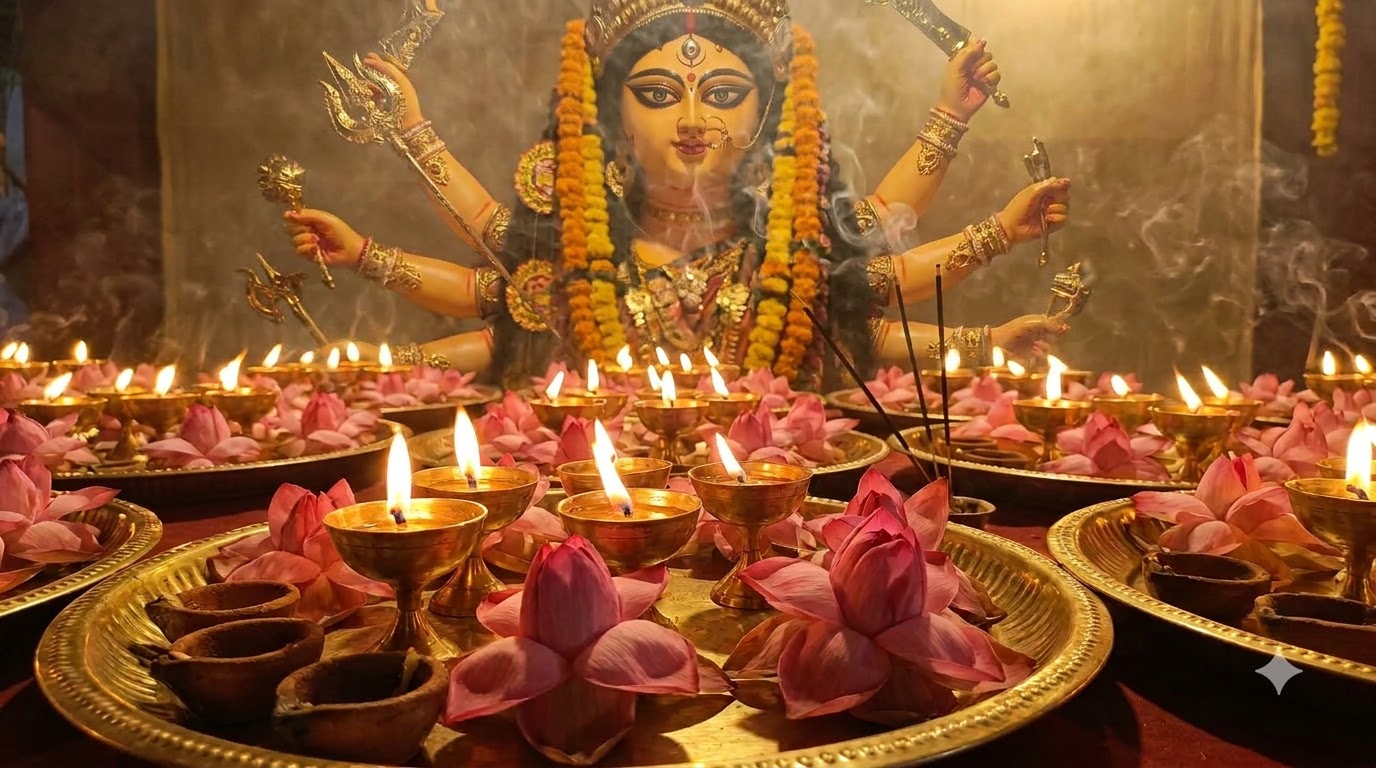
Celebrating the stories, traditions, and divine spirit of Durga Pujo. Photograph: The Agomonii Edit
Among the most intense and meaningful moments of Durga Puja is Sandhi Pujo, observed at the transition between Ashtami and Navami. The rituals are marked by a sense of stillness and urgency: a brief sacred interval, traditional offerings, and a community gathered around the worship of Maa Durga.
For visitors, understanding the meaning of Sandhi Pujo can make the experience more rewarding. The most important practical detail, however, is that its timing changes every year.
What Is Sandhi Pujo?
In the Hindu lunar calendar, sandhi means a junction or transition. Sandhi Pujo is performed at the juncture of the Ashtami and Navami tithis during Durga Puja. Traditionally, the ritual period covers the final 24 minutes of Ashtami and the first 24 minutes of Navami—a total of 48 minutes.
This interval is treated as especially auspicious in the ritual tradition. The observance is associated with the moment when the narrative of the goddess's battle with the forces of evil reaches a decisive point.
Why Are 108 Lotuses Offered?
The offering of 108 lotuses is one of the best-known elements associated with Sandhi Pujo. The number 108 carries significance across several Hindu devotional practices, while the lotus is a symbol of purity and spiritual offering.
Some pujas also include the lighting of 108 lamps, alongside other ritual observances. Practices can differ between households and community committees, so visitors may encounter variations in how the ceremony is conducted.
Why the Exact Time Changes Every Year
Sandhi Pujo is determined by the transition between lunar tithis, not by a fixed time on the clock. The relevant period therefore changes each year and can differ according to the calendar calculations used by a particular organiser or priest.
A generic article cannot provide a reliable clock time for every year's observance. For the current festival, check the puja committee's official announcement or a trusted local panchang close to the date. If you plan to attend a popular pandal, allow extra time for walking, queues, and crowd management.
How to Attend Respectfully
- Arrive early enough to find a safe place without blocking entrances or ritual spaces.
- Follow instructions from volunteers and security personnel.
- Avoid flash photography or stepping into restricted areas during the ceremony.
- If travelling between pandals, account for crowd conditions and the distance to your next destination.
Plan Your Pujo Route with Agomonii
Sandhi Pujo is a short but powerful moment in the Durga Puja calendar. Knowing its meaning—and confirming the year's exact timing—helps visitors approach the ritual with care rather than rushing in based on an outdated schedule.
With Agomonii, you can discover pandals, explore their details, check transit directions from your current location, and find nearby transport options to help organise your Pujo outing.
Visit Agomonii.in to explore Kolkata's Durga Puja pandals and plan your next visit.
Timing note: The Sandhi Pujo window is based on the Ashtami–Navami tithi transition. Confirm the current year's exact timing with the puja organiser or a trusted local panchang.