Suruchi Sangha Theme 2026: Utsho — Exploring Bengal's Roots and Identity
Suruchi Sangha's 2026 theme, Utsho, explores the origins of Bengal's identity through history, memory, and the people who shaped its story. Discover the theme, its connection to Dr Syama Prasad Mookerjee, and how to plan your visit to this New Alipore Durga Puja.
Celebrating the stories, traditions, and divine spirit of Durga Pujo. Photograph: The Agomonii Edit
Durga Puja has always been more than a celebration of artistry. Across Kolkata, themes can turn pandals into spaces for exploring history, culture, identity, and the stories that shape how people understand their world.
For 2026, Suruchi Sangha in New Alipore, South Kolkata, presents the theme Utsho—a word meaning origin or source. The theme invites visitors to think about where Bengal's identity comes from, how its history has unfolded, and the people and events that have influenced its journey.
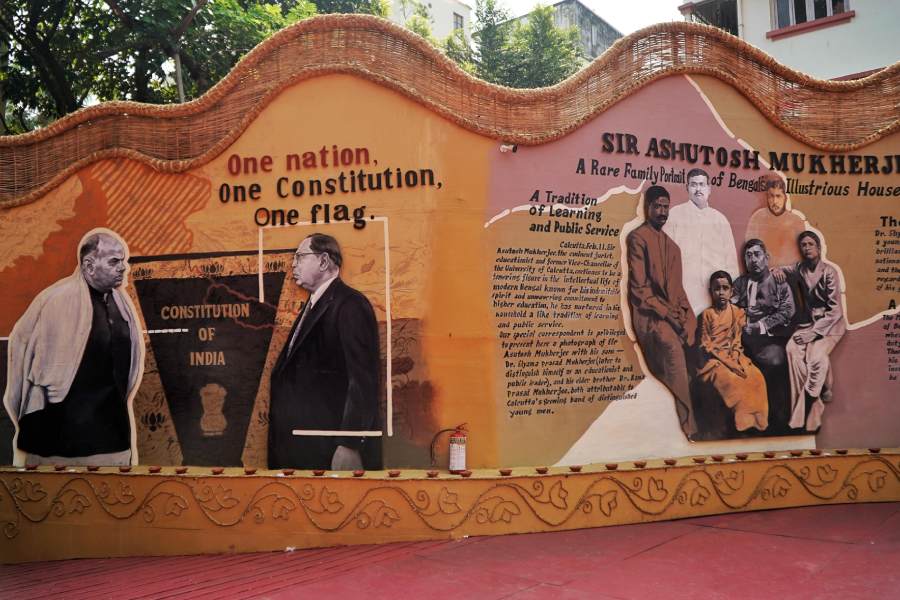
At the heart of the story is Dr Syama Prasad Mookerjee, a prominent figure in the political history of Bengal and the years surrounding India's Partition.
Utsho: A Journey Towards the Source
The word Utsho evokes beginnings: the roots of an idea, the origins of a community, and the experiences that shape a shared identity.
In the context of Bengal, these questions lead into a complex history of cultural belonging, political change, and the events surrounding Partition in 1947. The creation of West Bengal was not the work of a single individual. It emerged from political negotiations, competing visions, mass displacement, and the experiences of millions of people whose lives were transformed by Partition.
By using the idea of an origin as its starting point, Suruchi Sangha's theme encourages visitors to consider how historical narratives are formed—and how the past continues to influence the present.
Dr Syama Prasad Mookerjee: The Historical Figure at the Centre
Dr Syama Prasad Mookerjee (1901–1953) was an educationist, barrister, parliamentarian, and political leader. He served as India's first Union Minister for Industry and Supply in Jawaharlal Nehru's first cabinet after independence. He later founded the Bharatiya Jana Sangh, a political party that became the predecessor of the Bharatiya Janata Party (BJP).
Mookerjee remains an important figure in discussions about Bengal's political future during the final years of British rule and the Partition of India. He advocated for the inclusion of a portion of Bengal within India as the subcontinent approached independence and Partition.
His legacy is also politically contested, and his role should be understood within the wider historical context of the period. Bengal's division involved numerous political organisations, leaders, negotiations, and communities; historians do not generally attribute the creation of West Bengal to one person alone.
Within the context of Utsho, Mookerjee's story provides a point of entry into these larger questions about political identity, borders, and belonging.
Bengal's Identity: A Story Larger Than One Person
The history of West Bengal cannot be separated from the upheaval of Partition. The division of Bengal redrew borders and reshaped the lives of millions of people.